
Granit je vrsta magmatske kamnine, ki se pridobiva zaradi svoje izjemne trdnosti, gostote, vzdržljivosti in odpornosti proti koroziji. Vendar je granit tudi zelo vsestranski – ni primeren le za kvadrate in pravokotnike! Pravzaprav samozavestno redno delamo z granitnimi komponentami, izdelanimi v oblikah, kotih in krivuljah vseh različic – z odličnimi rezultati.
Through our state of the art processing, cut surfaces can be exceptionally flat. These qualities make granite the ideal material to create custom-size and custom-design machine bases and metrology components. Granite is:
■ strojno obdelan
■ po rezanju in obdelavi natančno ravno
■ odporen proti rji
■ trpežna
■ dolgo obstojen
Granitne komponente je tudi enostavno čistiti. Pri ustvarjanju modelov po meri izberite granit zaradi njegovih izjemnih prednosti.
STANDARDI / VISOKA OBRABNA UPORABA
Granit, ki ga ZHHIMG uporablja za naše standardne površinske plošče, ima visoko vsebnost kremena, kar zagotavlja večjo odpornost proti obrabi in poškodbam. Naše vrhunske črne barve imajo nizko stopnjo absorpcije vode, kar zmanjšuje možnost rjavenja vaših natančnih merilnikov med nameščanjem na plošče. Barve granita, ki jih ponuja ZHHIMG, zmanjšujejo bleščanje, kar pomeni manjše obremenjevanje oči za ljudi, ki uporabljajo plošče. Pri izbiri vrst granita smo upoštevali toplotno raztezanje, da bi ta vidik čim bolj zmanjšali.
CUSTOM APPLICATIONS
Ko vaša aplikacija zahteva ploščo z oblikami po meri, navojnimi vložki, utori ali drugo obdelavo, boste želeli izbrati material, kot je črna Jinan Black. Ta naravni material ponuja vrhunsko togost, odlično dušenje vibracij in izboljšano obdelovalnost.
Pomembno je omeniti, da sama barva ni pokazatelj fizikalnih lastnosti kamna. Na splošno je barva granita neposredno povezana s prisotnostjo ali odsotnostjo mineralov, kar morda nima vpliva na lastnosti, zaradi katerih je dober material za površinske plošče. Obstajajo rožnati, sivi in črni graniti, ki so odlični za površinske plošče, pa tudi črni, sivi in rožnati graniti, ki so popolnoma neprimerni za precizno uporabo. Ključne značilnosti granita, ki se nanašajo na njegovo uporabo kot material za površinske plošče, nimajo nobene zveze z barvo in so naslednje:
■ Togost (upogib pod obremenitvijo - označen z modulom elastičnosti)
■ Trdota
■ Gostota
■ Odpornost proti obrabi
■ Stabilnost
■ Poroznost
Preizkusili smo veliko granitnih materialov in jih primerjali. Končno smo dobili rezultat, črni granit Jinan je najboljši material, kar smo jih kdaj poznali. Indijski črni granit in južnoafriški granit sta podobna črnemu granitu Jinan, vendar so njune fizikalne lastnosti slabše od tistih pri črnem granitu Jinan. ZHHIMG bo še naprej iskal več granitnih materialov na svetu in primerjal njihove fizikalne lastnosti.
Za več informacij o granitu, ki je pravi za vaš projekt, nas kontaktirajte.info@zhhimg.com.
Različni proizvajalci uporabljajo različne standarde. Na svetu obstaja veliko standardov.
Standard DIN, ASME B89.3.7-2013 ali zvezna specifikacija GGG-P-463c (granitne površinske plošče) in tako naprej kot osnova za njihove specifikacije.
In izdelamo lahko granitno precizno inšpekcijsko ploščo v skladu z vašimi zahtevami. Če želite izvedeti več o drugih standardih, nas kontaktirajte.
Ravnost lahko razumemo kot vse točke na površini, ki ležijo znotraj dveh vzporednih ravnin, osnovne ravnine in ravnine strehe. Meritev razdalje med ravninama je splošna ravnost površine. Ta meritev ravnosti ima običajno toleranco in lahko vključuje oznako razreda.
Na primer, tolerance ravnosti za tri standardne razrede so v zvezni specifikaciji opredeljene po naslednji formuli:
■ Laboratorijski razred AA = (40 + diagonala na kvadrat / 25) x 0,000001" (enostransko)
■ Stopnja pregleda A = Laboratorijska stopnja AA x 2
■ Orodjarna, stopnja B = laboratorijska stopnja AA x 4.
Za površinske plošče standardnih velikosti zagotavljamo tolerance ravnosti, ki presegajo zahteve te specifikacije. Poleg ravnosti ASME B89.3.7-2013 in zvezna specifikacija GGG-P-463c obravnavata teme, kot so: natančnost ponovnih meritev, lastnosti materialov granitnih površinskih plošč, površinska obdelava, lokacija podpornih točk, togost, sprejemljive metode pregledovanja, namestitev navojnih vložkov itd.
ZHHIMG granitne površinske plošče in granitne inšpekcijske plošče izpolnjujejo ali presegajo vse zahteve, določene v tej specifikaciji. Trenutno ni nobene opredelitvene specifikacije za granitne kotne plošče, vzporednice ali glavne kvadrate.
Formule za druge standarde pa najdete vPRENESI.
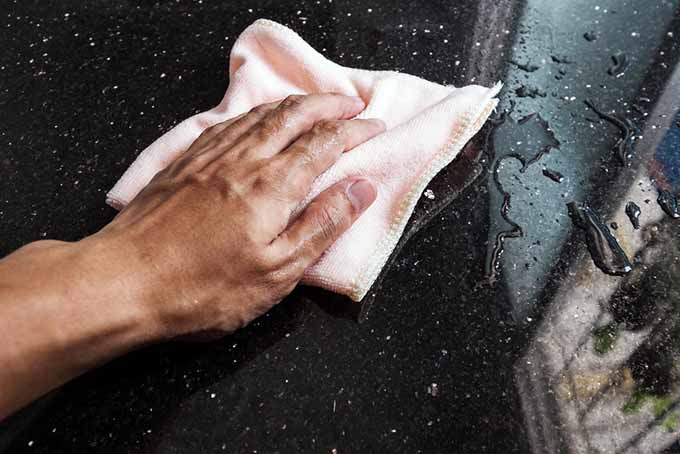
Najprej je pomembno, da ploščo ohranjate čisto. Abrazivni prah v zraku je običajno največji vir obrabe plošče, saj se ponavadi vgrajuje v obdelovance in kontaktne površine merilnikov. Drugič, ploščo pokrijte, da jo zaščitite pred prahom in poškodbami. Življenjsko dobo lahko podaljšate tako, da ploščo pokrijete, ko je ne uporabljate, da ploščo občasno obračate, da se posamezno območje ne obremenjuje prekomerno, in da jeklene kontaktne ploščice na merilniku zamenjate s karbidnimi ploščicami. Prav tako se izogibajte postavljanju hrane ali brezalkoholnih pijač na ploščo. Upoštevajte, da številne brezalkoholne pijače vsebujejo ogljikovo ali fosforno kislino, ki lahko raztopi mehkejše minerale in pusti majhne jamice na površini.
To je odvisno od načina uporabe krožnika. Če je mogoče, priporočamo, da krožnik očistite na začetku dneva (ali delovne izmene) in nato še enkrat na koncu. Če se krožnik umaže, zlasti z oljnatimi ali lepljivimi tekočinami, ga je verjetno treba takoj očistiti.
Ploščo redno čistite s tekočim ali brezvodnim čistilom za površine plošč ZHHIMG. Izbira čistilnih raztopin je pomembna. Če uporabljate hlapno topilo (aceton, razredčilo za lak, alkohol itd.), bo izhlapevanje ohladilo površino in jo poškodovalo. V tem primeru je treba ploščo pred uporabo pustiti, da se normalizira, sicer bodo pri meritvah prišlo do napak.
Čas, potreben za normalizacijo plošče, se bo razlikoval glede na velikost plošče in količino ohlajanja. Za manjše plošče bi morala zadostovati ena ura. Za večje plošče bo morda potreben dve uri. Če se uporablja čistilo na vodni osnovi, bo prišlo tudi do nekaj ohlajanja z izhlapevanjem.
Plošča bo zadržala tudi vodo, kar lahko povzroči rjavenje kovinskih delov, ki so v stiku s površino. Nekatera čistila po sušenju pustijo tudi lepljiv ostanek, ki privlači prah v zraku in dejansko poveča obrabo, namesto da bi jo zmanjšala.
To je odvisno od uporabe plošče in okolja. Priporočamo, da se nova plošča ali precizni granitni pripomoček v enem letu od nakupa popolnoma ponovno kalibrira. Če bo granitna plošča deležna velike uporabe, je priporočljivo, da ta interval skrajšate na šest mesecev. Mesečni pregled za ponavljajoče se napake pri meritvah z uporabo elektronske libele ali podobne naprave bo pokazal morebitne obrabne madeže in traja le nekaj minut. Po določitvi rezultatov prve ponovne kalibracije se lahko interval kalibracije podaljša ali skrajša, kot to dovoljuje ali zahteva vaš interni sistem kakovosti.
Nudimo vam storitve, ki vam bodo pomagale pri pregledu in kalibraciji vaše granitne površinske plošče.

Obstaja več možnih vzrokov za razlike med kalibracijami:
- Površina je bila pred kalibracijo oprana z vročo ali hladno raztopino in ji ni bilo dovolj časa za normalizacijo.
- Plošča ni pravilno podprta
- Sprememba temperature
- Osnutki
- Neposredna sončna svetloba ali drugo sevalno toploto na površini plošče. Prepričajte se, da nadzemna razsvetljava ne segreva površine.
- Spremembe vertikalnega temperaturnega gradienta med zimo in poletjem (če je le mogoče, poznajte vertikalni temperaturni gradient v času kalibracije.)
- Plošči ni bilo dovolj časa za normalizacijo po odpremi
- Nepravilna uporaba inšpekcijske opreme ali uporaba nekalibrirane opreme
- Sprememba površine zaradi obrabe
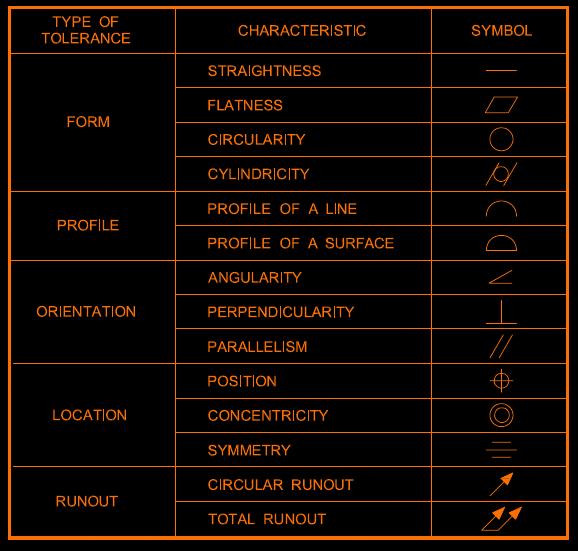
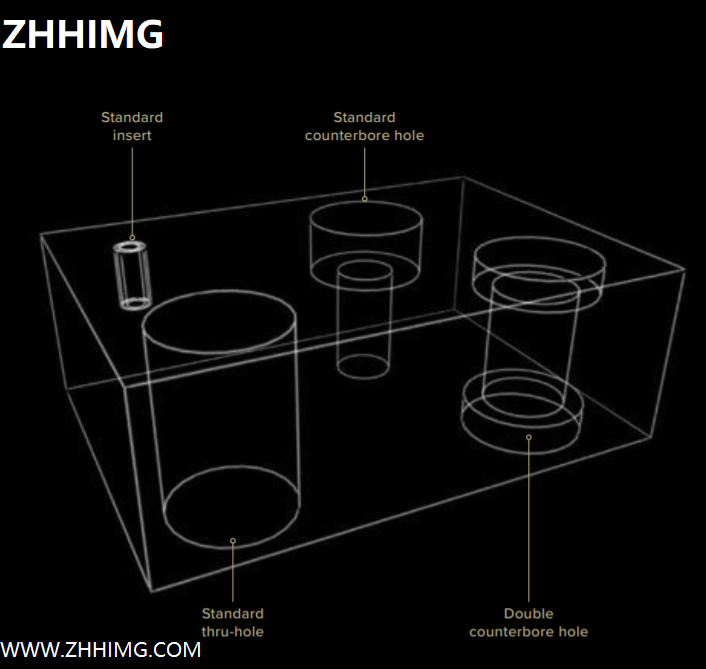
Koliko vrst lukenj je na preciznem granitu?
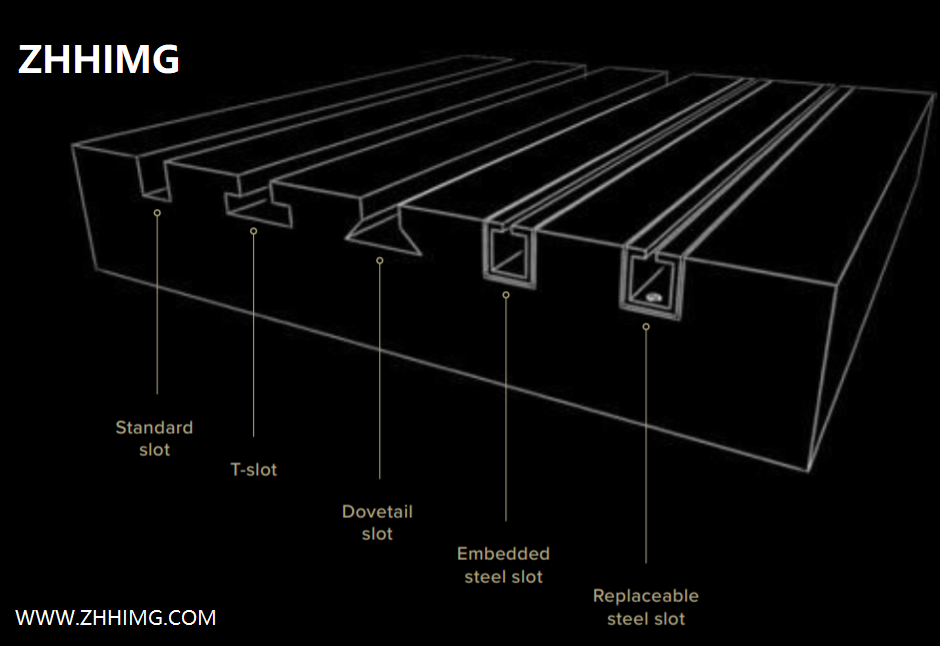
Reže na preciznih granitnih komponentah
Za številne tovarne, inšpekcijske sobe in laboratorije se kot osnova za natančne meritve zanašajo na precizne granitne površinske plošče. Ker je vsaka linearna meritev odvisna od natančne referenčne površine, s katere se vzamejo končne dimenzije, površinske plošče zagotavljajo najboljšo referenčno ravnino za pregled dela in postavitev pred obdelavo. Prav tako so idealna osnova za meritve višine in merilne površine. Poleg tega jih visoka stopnja ravnosti, stabilnosti, splošna kakovost in izdelava naredijo dobro izbiro za montažo sofisticiranih mehanskih, elektronskih in optičnih merilnih sistemov. Za kateri koli od teh merilnih postopkov je nujno, da površinske plošče kalibriramo.
Repeat Measurements and Flatness
Tako meritve ravnosti kot tudi ponavljajoče se meritve so ključne za zagotovitev natančne površine. Ravnost lahko štejemo kot vse točke na površini, ki so znotraj dveh vzporednih ravnin, osnovne ravnine in strešne ravnine. Meritev razdalje med ravninama je splošna ravnost površine. Ta meritev ravnosti ima običajno toleranco in lahko vključuje oznako razreda.
The flatness tolerances for three standard grades are defined in the federal specification as determined by the following formula:
Standard DIN, standard GB, standard ASME, standard JJS ... različne države z različnimi stojali ...
In addition to flatness, repeatability must be ensured. A repeat measurement is a measurement of local flatness areas. It is a measurement taken anywhere on the surface of a plate that will repeat within the stated tolerance. Controlling local area flatness to a tighter tolerance than overall flatness guarantees a gradual change in surface flatness profile, thereby minimizing local errors.
Da bi zagotovili, da površinska plošča izpolnjuje tako specifikacije glede ravnosti kot tudi specifikacije glede ponovljivih meritev, bi morali proizvajalci granitnih površinskih plošč kot osnovo za svoje specifikacije uporabiti zvezno specifikacijo GGG-P-463c. Ta standard obravnava natančnost ponovljivih meritev, lastnosti materiala granitne površinske plošče, površinsko obdelavo, lokacijo podpornih točk, togost, sprejemljive metode pregledovanja in namestitev navojnih vložkov.
Checking Plate Accuracy
Z upoštevanjem nekaj preprostih smernic bi morala naložba v granitno površinsko ploščo trajati več let. Pogostost preverjanja natančnosti površinske plošče se razlikuje glede na uporabo plošče, okolje v delavnici in zahtevano natančnost. Splošno pravilo je, da se nova plošča v enem letu od nakupa popolnoma ponovno umeri. Če se plošča pogosto uporablja, je priporočljivo, da ta interval skrajšate na šest mesecev.
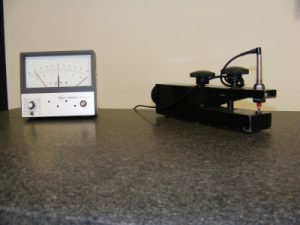
Before a surface plate has worn beyond specification for overall flatness, it will show worn or wavy posts. Monthly inspection for repeat measurement errors using a repeat reading gage will identify wear spots. A repeat reading gage is a high-precision instrument that detects local error and can be displayed on a high magnification electronic amplifier.
An effective inspection program should include regular checks with an autocollimator, providing actual calibration of overall flatness traceable to National Institute of Standards and Technology (NIST). Comprehensive calibration by the manufacturer or an independent company is necessary from time to time.
Variations Between Calibrations
V nekaterih primerih obstajajo razlike med kalibracijami površinskih plošč. Včasih so lahko dejavniki, kot so spremembe površine zaradi obrabe, nepravilna uporaba kontrolne opreme ali uporaba nekalibrirane opreme, razlog za te razlike. Najpogostejša dejavnika pa sta temperatura in podpora.
One of the most important variables is temperature. For instance, the surface might have been washed with a hot or cold solution prior to calibration and not allowed sufficient time to normalize. Other causes of temperature change include drafts of cold or hot air, direct sunlight, overhead lighting or other sources of radiant heat on the surface of the plate.
There also can be variations in the vertical temperature gradient between winter and summer. In some cases, the plate is not allowed sufficient time to normalize after shipment. It is a good idea to record the vertical gradient temperature at the time the calibration is performed.
Another common cause for calibration variation is a plate that is improperly supported. A surface plate should be supported at three points, ideally located 20% of the length in from the ends of the plate. Two supports should be located 20% of the width in from the long sides, and the remaining support should be centered.
Only three points can rest solidly on anything but a precision surface. Attempting to support the plate at more than three points will cause the plate to receive its support from various combinations of three points, which will not be the same three points on which it was supported during production. This will introduce errors as the plate deflects to conform to the new support arrangement. Consider using steel stands with support beams designed to line up with the proper support points. Stands for this purpose are generally available from the surface plate manufacturer.
If the plate is properly supported, precise leveling is only necessary if an application specifies it. Leveling is not necessary to maintain the accuracy of a properly supported plate.
Extend Plate Life
Upoštevanje nekaj smernic bo zmanjšalo obrabo granitne plošče in na koncu podaljšalo njeno življenjsko dobo.
Najprej je pomembno, da plošča ostane čista. Abrazivni prah v zraku je običajno največji vir obrabe plošče, saj se ponavadi vgrajuje v obdelovance in kontaktne površine merilnikov.
It also is important to cover plates to protect it from dust and damage. Wear life can be extended by covering the plate when not in use.
Ploščo občasno obračajte, da posamezno območje ne bo pretirano obremenjeno. Priporočljivo je tudi, da jeklene kontaktne ploščice na merilniku zamenjate s karbidnimi ploščicami.
Avoid setting food or soft drinks on the plate. Many soft drinks contain either carbonic or phosphoric acid, which can dissolve the softer minerals and leave small pits in the surface.
Where to Relap
Ko je treba granitno ploščo preplastiti, razmislite, ali naj se ta storitev opravi na kraju samem ali v kalibracijskem centru. Vedno je bolje, da ploščo preplastite v tovarni ali v namenskem centru. Če pa plošča ni preveč obrabljena, običajno znotraj 0,001 palca od zahtevane tolerance, jo je mogoče preplastiti na kraju samem. Če je plošča obrabljena do te mere, da je več kot 0,001 palca zunaj tolerance, ali če je močno luknjičasta ali zarezana, jo je treba pred ponovnim preplastenjem poslati v tovarno na brušenje.
A calibration facility has the equipment and factory setting providing the optimum conditions for proper plate calibration and rework if necessary.
Pri izbiri tehnika za kalibracijo in obnovo površine na kraju samem je potrebna velika previdnost. Zahtevajte akreditacijo in preverite, ali ima oprema, ki jo bo tehnik uporabljal, sledljivo kalibracijo. Pomemben dejavnik so tudi izkušnje, saj je potrebnih več let, da se naučimo pravilno brusiti precizni granit.
Critical measurements start with a precision granite surface plate as a baseline. By ensuring a reliable reference by using a properly calibrated surface plate, manufacturers have one of the essential tools for reliable measurements and better quality parts.Q
Checklist for Calibration Variations
1. Površina je bila pred kalibracijo oprana z vročo ali hladno raztopino in ji ni bilo dano dovolj časa za normalizacijo.
2. Plošča ni pravilno podprta.
3. Sprememba temperature.
4. Osnutki.
5. Neposredna sončna svetloba ali drugo sevalno toploto na površini plošče. Prepričajte se, da nadzemna razsvetljava ne segreva površine.
6. Spremembe vertikalnega temperaturnega gradienta med zimo in poletjem. Če je le mogoče, poznajte vertikalni temperaturni gradient v času kalibracije.
7. Plošča po odpremi ni imela dovolj časa za normalizacijo.
8. Nepravilna uporaba inšpekcijske opreme ali uporaba nekalibrirane opreme.
9. Sprememba površine zaradi obrabe.
Tech Tips
- Ker je vsaka linearna meritev odvisna od natančne referenčne površine, s katere se vzamejo končne dimenzije, površinske plošče zagotavljajo najboljšo referenčno ravnino za pregled obdelovanca in postavitev pred obdelavo.
- Controlling local area flatness to a tighter tolerance than overall flatness guarantees a gradual change in surface flatness profile, thereby minimizing local errors.
- Učinkovit program inšpekcijskih pregledov mora vključevati redne preglede z avtokolimatorjem, ki zagotavljajo dejansko kalibracijo celotne ravnosti, sledljivo do nacionalnega inšpekcijskega organa.
Med mineralnimi delci, ki sestavljajo granit, je več kot 90 % glinenca in kremena, od katerih je glinenca največ. Glinenec je pogosto bele, sive in meso rdeče barve, kremen pa je večinoma brezbarven ali sivkasto bel, kar predstavlja osnovno barvo granita. Glinenec in kremen sta trda minerala in ju je težko premikati z jeklenim nožem. Kar zadeva temne lise v granitu, predvsem črno sljudo, je prisotnih še nekaj drugih mineralov. Čeprav je biotit relativno mehak, njegova odpornost na stres ni šibka, hkrati pa ga je v granitu malo, pogosto manj kot 10 %. To je materialno stanje, v katerem je granit še posebej močan.
Drug razlog, zakaj je granit trden, je ta, da so njegovi mineralni delci tesno povezani med seboj in vgrajeni drug v drugega. Pore pogosto predstavljajo manj kot 1 % celotne prostornine kamnine. To daje granitu sposobnost, da prenese močne pritiske in ga vlaga ne prodre zlahka.
Granitne komponente so izdelane iz kamna, ki ne rjavi, je odporen na kisline in alkalije, ima dobro odpornost proti obrabi in dolgo življenjsko dobo ter ne zahteva posebnega vzdrževanja. Precizne granitne komponente se večinoma uporabljajo v orodjih strojne industrije. Zato se imenujejo precizne granitne komponente ali granitne komponente. Značilnosti preciznih granitnih komponent so v osnovi enake kot pri granitnih ploščadih. Uvod v orodjarstvo in merjenje preciznih granitnih komponent: Precizna obdelava in tehnologija mikro obdelave sta pomembni razvojni smeri strojne industrije in sta postali pomemben kazalnik za merjenje visokotehnološke ravni. Razvoj najsodobnejše tehnologije in obrambne industrije je neločljivo povezan s precizno obdelavo in tehnologijo mikro obdelave. Granitne komponente je mogoče gladko drseti med merjenjem, ne da bi se zatikale. Merjenje delovne površine, splošne praske ne vplivajo na natančnost merjenja. Granitne komponente je treba zasnovati in izdelati v skladu z zahtevami povpraševanja.
Področje uporabe:
Kot vsi vemo, se vedno več strojev in opreme odloča za precizne granitne komponente.
Granitne komponente se uporabljajo za dinamično gibanje, linearne motorje, cmm, cnc, laserske stroje ...
Za več informacij nas kontaktirajte.
Granitne merilne naprave in granitne mehanske komponente so izdelane iz visokokakovostnega črnega granita Jinan. Zaradi visoke natančnosti, dolge življenjske dobe, dobre stabilnosti in odpornosti proti koroziji se vse pogosteje uporabljajo pri pregledovanju izdelkov v sodobni industriji in na znanstvenih področjih, kot so mehansko, vesoljsko in znanstveno raziskovanje.
Prednosti
----Dvakrat trše kot lito železo;
----Minimalne spremembe dimenzij so posledica sprememb temperature;
----Brez ožemanja, zato ni prekinitve dela;
----Brez zarobkov ali izboklin zaradi drobnozrnate strukture in neznatne lepljivosti, kar zagotavlja visoko stopnjo ravnosti skozi dolgo življenjsko dobo in ne povzroča poškodb drugih delov ali instrumentov;
----Brezhibno delovanje za uporabo z magnetnimi materiali;
----Dolga življenjska doba in brez rje, kar ima za posledico nizke stroške vzdrževanja.
Precizne granitne površinske plošče so natančno brušene do visokega standarda ravnosti za doseganje natančnosti in se uporabljajo kot osnova za montažo sofisticiranih mehanskih, elektronskih in optičnih merilnih sistemov.
Nekatere edinstvene lastnosti granitne površinske plošče:
Enakomernost trdote;
Natančni pogoji pod obremenitvijo;
Absorber vibracij;
Enostavno čiščenje;
Odporno na zavijanje;
Nizka poroznost;
Neabrazivno;
Nemagnetno
Prednosti granitne površinske plošče
First, the rock after a long period of natural aging, uniform structure, coefficient minimum, the internal stress completely disappear, not deformed, so the precision is high.
Pošlji e-pošto
Skype
Angleščina
Nemščina
Francoščina
Portugalščina
Španščina
Japonščina
Korejščina
arabščina
Irski
Grščina
turščina
Italijanščina
Danščina
Romunščina
Indonezijščina
Češka
švedščina
poljščina
baskovščina
Katalonski
Esperanto
Hindijščina
Lao
Albanec
Amharščina
Armenski
Azerbajdžanščina
Beloruščina
PBengalščina
Bosanski
Bolgarščina
Cebuansko
Čičeva
Korzikanec
hrvaščina
Nizozemščina
Estonščina
Filipinec
Finski
Frizijščina
galicijščina
Gruzijska
gudžaratščina
Haitijščina
Havščina
havajskiHebrejščinaHmong
madžarščinaIslandščinaIgboščina
JavanskiKannada
Kazaščina
Kmerščina
Kurdščina
Kirgizijščina
Latinsko
Latvijščina
Litovščina
Luksemburg ...
Makedonščina
Madagaskarski
Malajščina
Malajalamščina
Malteščina
Maori
Maratščina
mongolščina
Burmanski
Nepalščina
norveščina
Paštunščina
perzijščina
pandžabščina
Srbščina
Sesotho
Sinhala
Slovaščina
- slovenščina
- Somalščina
- Samoanski
- Škotska gelščina
- Šona
- Sindhi
- Sundanščina
- svahili
- Tadžik
- Tamilščina
- Telugu
Tajska
Ukrajinščina
UrdujščinaAUzbeščina2VietnamščinaLValižanščinaAKosovščina
Jidiš
Jorubščina
Zulujščina
kinjaruandščina
Tatar
Turkmenščina
Ujgurščina
Kitajščina
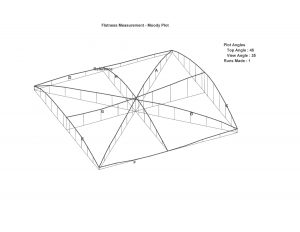
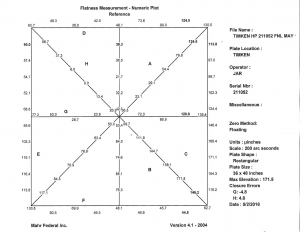
Routine surface plate calibration is necessary to ensure flatness and repeatability over time. The precision measurement group at Cross is ISO 17025 accredited for calibration of surface plate flatness and repeatability. We utilize the Mahr Surface Plate Certification System featuring:
- Moody and Profile Analysis,
- Isometric or Numeric plots,
- Multiple Run Average, and
- Automatic Grading According to Industry Standards.
The Mahr Computer Assisted Model determines any angular or linear deviation from absolute level, and is ideally suited for highly precise profiling of surface plates.
Intervals between calibrations will vary depending on the frequency of use, the environmental conditions where the plate is located, and the specific quality requirements of your company. Properly maintaining your surface plate may allow for longer intervals between each calibration, helps you avoid the added cost of relapping, and most importantly ensures the measurements you obtain on the plate are as accurate as possible. Although surface plates appear robust, they are precision instruments and should be treated as such. Here are some things to consider regarding care of your surface plates:
- Keep the plate clean, and if possible cover it when it is not in use
- Nothing should be placed on the plate other than gages or pieces to be measured.
- Don’t use the same spot on the plate every time.
- If possible, rotate the plate periodically.
- Respect the load limit of your plate
Precision Granite Base Can Improve Machine Tool Performances
Requirements are constantly increasing in mechanical engineering in general and in machine tool construction in particular. Achieving maximum precision and performance values without increasing costs are constant challenges to being competitive. The machine tool bed is a decisive factor here. Therefore, more and more machine tool manufacturers are relying on granite. Due to its physical parameters, it offers clear advantages that cannot be achieved with steel or polymer concrete.
Granite is a so-called volcanic deep rock and has a very dense and homogeneous structure with an extremely low coefficient of expansion, low thermal conductivity and high vibration damping.
Below you will discover why the common opinion that granite is mainly only suitable as machine base for high-end coordinate measuring machines is long outdated and why this natural material as a machine tool base is a very advantageous alternative to steel or cast iron even for high-precision machine tools.
We can manufacture granite components for dynamic motion, granite components for linear motors, granite components for ndt, granite components for xray, granite components for cmm, granite components for cnc, granite precision for laser, granite components for aerospace, granite components for precision stages...
High Added Value Without Additional Costs
The increasing use of granite in mechanical engineering is not so much due to the massive increase in the price of steel. Rather, it is because the added value for the machine tool achieved with a machine bed made of granite is possible at very little or no extra cost. This is proven by cost comparisons of well-known machine tool manufacturers in Germany and Europe.
The considerable gain in thermodynamic stability, vibration damping and long-term precision made possible by granite cannot be achieved with a cast iron or steel bed, or only at relatively high cost. For example, thermal errors can account for up to 75% of the total error of a machine, with compensation often attempted for by software – with moderate success. Due to its low thermal conductivity, granite is the better foundation for long-term precision.
With a tolerance of 1 μm, granite easily meets the flatness requirements according to DIN 876 for the degree of accuracy 00. With a value of 6 on the hardness scale 1 to 10, it is extremely hard, and with its specific weight of 2.8g/cm³ it almost reaches the value of aluminium. This also results in additional advantages such as higher feed rates, higher axis accelerations and an extension of the tool life for cutting machine tools. Thus, the change from a cast bed to a granite machine bed moves the machine tool in question into the high-end class in terms of precision and performance – at no extra cost.
Granite’s Improved Ecological Footprint
In contrast to materials such as steel or cast iron, natural stone does not have to be produced with a great deal of energy and using additives. Only relatively small amounts of energy are required for quarrying and surface treatment. This results in a superior ecological footprint, which even at the end of a machine’s life surpasses that of steel as a material. The granite bed can be the basis for a new machine or be used for completely different purposes such as shredding for road construction.
Nor are there any shortages of resources for granite. It is a deep rock formed from magma within the earth’s crust. It has ‘matured’ for millions of years and is available in very large quantities as a natural resource on almost all continents, including all of Europe.
Conclusion: The numerous demonstrable advantages of granite compared to steel or cast iron justify the increasing willingness of mechanical engineers to use this natural material as a foundation for high-precision, high-performance machine tools. Detailed information about granite properties, which are advantageous for machine tools and mechanical engineering, can be found in this further article.
A repeat measurement is a measurement of local flatness areas. The Repeat Measurement specification states that a measurement taken anywhere on the surface of a plate will repeat within the stated tolerance. Controlling local area flatness tighter than overall flatness guarantees a gradual change in surface flatness profile thereby minimizing local errors.
Most manufacturers, including imported brands, adhere to the Federal Specification of overall flatness tolerances but many overlook the repeat measurements. Many of the low value or budget plates available in the market today will not guarantee repeat measurements. A manufacturer who does not guarantee repeat measurements is NOT producing plates that meet the requirements of ASME B89.3.7-2013 or Federal Specification GGG-P-463c, or DIN 876, GB, JJS...
Both are critical to ensure a precision surface for accurate measurements. Flatness specification alone is not sufficient to guarantee measurement accuracy. Take as an example, a 36 X 48 Inspection Grade A surface plate, which meets ONLY the flatness specification of .000300". If the piece being checked bridges several peaks, and the gage being used is in a low spot, the measurement error could be the full tolerance in one area, 000300"! Actually, it can be much higher if the gage is resting on the slope of an incline.
Errors of .000600"-.000800" are possible, depending upon the severity of the slope, and the arm length of the gage being used. If this plate had a Repeat Measurement specification of .000050"F.I.R. then the measurement error would be less than .000050" regardless of where the measurement is taken on the plate. Another problem, which usually arises when an untrained technician attempts to resurface a plate on-site, is the use of Repeat Measurements alone to certify a plate.
The instruments that are used to verify repeatability are NOT designed to check overall flatness. When set to zero on a perfectly curved surface, they will continue to read zero, whether that surface is perfectly flat or perfectly concave or convex 1/2"! They simply verify the uniformity of the surface, not the flatness. Only a plate that meets both the flatness specification AND the repeat measurement specification truly meets the requirements of ASME B89.3.7-2013 or Federal Specification GGG-P-463c.
Ask us about or flatness specification and repeat measurement promise by calling +86 19969991659 or emailing INFO@ZHHIMG.COM
Yes, but they can only be guaranteed for a specific vertical temperature gradient. The effects of thermal expansion on the plate could easily cause a change in accuracy greater than the tolerance if there is a change in the gradient. In some cases, if the tolerance is tight enough, the heat absorbed from overhead lighting can cause enough of a gradient change over several hours.
Granite has a coefficient of thermal expansion of approximately .0000035 inches per inch per 1°F. As an example: A 36" x 48" x 8" surface plate has an accuracy of .000075" (1/2 of Grade AA) at a gradient of 0°F, the top and bottom are the same temperature. If the top of the plate warms up to the point where it is 1°F warmer than the bottom, the accuracy would change to .000275" convex ! Therefore, ordering a plate with a tolerance tighter than Laboratory Grade AA should only be considered if there is adequate climate control.
A surface plate should be supported at 3 points, ideally located 20% of the length in from the ends of the plate. Two supports should be located 20% of the width in from the long sides, and the remaining support should be centered. Only 3 points can rest solidly on anything but a precision surface.
The plate should be supported at these points during production, and it should be supported only at these three points while in use. Attempting to support the plate at more than three points will cause the plate to receive its support from various combinations of three points, which will not be the same 3 points on which it was supported during production. This will introduce errors as the plate deflects to conform to the new support arrangement. All zhhimg steel stands have support beams designed to line up with the proper support points.
If the plate is properly supported, precise leveling is only necessary if your application calls for it. Leveling is not necessary to maintain the accuracy of a properly supported plate.
Why Choose Granite for Machine Bases and Metrology Components?
The answer is 'yes' for almost every application. The advantages of granite include: No rust or corrosion, almost immune to warping, no compensating hump when nicked, longer wear life, smoother action, greater precision, virtually non-magnetic, low co-efficient of thermal expansion, and low maintenance cost.
Granite is a type of igneous rock quarried for its extreme strength, density, durability, and resistance to corrosion. But granite is also very versatile– it’s not just for squares and rectangles! In fact, Starrett Tru-Stone confidently works with granite components engineered in shapes, angles, and curves of all variations on a regular basis—with excellent outcomes.
Through our state of the art processing, cut surfaces can be exceptionally flat. These qualities make granite the ideal material to create custom-size and custom-design machine bases and metrology components. Granite is:
machineable
precisely flat when cut and finished
rust resistant
durable
long lasting
Granite components are also easy to clean. When creating custom designs, be sure to choose granite for its superior benefits.
STANDARDS / HIGH WEAR APPLICATIONS
The granite utilized by ZhongHui for our standard surface plate products has high quartz content, which provides greater resistance to wear and damage. Our Superior Black and Crystal Pink colors have low water absorption rates, minimizing the possibility of your precision gages rusting while setting on the plates. The colors of granite offered by ZhongHui result in less glare, which means less eyestrain for individuals using the plates. We have chosen our granite types while considering thermal expansion in an effort to keep this aspect minimal.
CUSTOM APPLICATIONS
When your application calls for a plate with custom shapes, threaded inserts, slots or other machining, you’ll want to select a material like Black Diabase. This natural material offers superior stiffness, excellent vibration dampening, and improved machinability.
Yes, if they are not too badly worn. Our factory setting and equipment allow the optimum conditions for proper plate calibration and rework if necessary. Generally, if a plate is within .001" of the required tolerance, it can be resurfaced on-site. If a plate is worn to the point where it is more than .001" out of tolerance, or if it is badly pitted or nicked, then it will need to be sent to the factory for grinding prior to relapping.
Great care should be exercised in selecting an on-site calibration and resurfacing technician. We urge you to use caution in selecting your calibration service. Ask for accreditation and verify the equipment that the technician will use has a National Inspection Institution traceable calibration. It takes many years to learn how to properly lap precision granite.
ZhongHui provides quick turn-around on calibrations performed in our factory. Send your plates in for calibration if possible. Your quality and reputation depend on the accuracy of your measurement instruments including surface plates!
Our black surface plates have a significantly higher density and are up to three times as stiff. Therefore, a plate made of the black does not need to be as thick as a granite plate of the same size to have equal or greater resistance to deflection. Reduced thickness means less weight and lower shipping costs.
Beware of others who use lower quality black granite in the same thickness. As stated above, properties of granite, like wood or metal, vary by material and color, and is not an accurate predictor of stiffness, hardness, or wear resistance. In fact, many types of black granite and diabase are very soft and not suitable for surface plate applications.
No. The specialized equipment and training necessary to rework these items requires that they be returned to the factory for calibration and rework.
Yes. Ceramic and granite have similar characteristics, and the methods used to calibrate and lap granite can be used with ceramic items as well. Ceramics are more difficult to lap than granite resulting in a higher cost.
Yes, provided that the inserts are recessed below the surface. If steel inserts are flush with, or above the surface plane, they must be spot-faced down before the plate can be lapped. If required, we can provide that service.
Yes. Steel inserts with the desired thread (English or metric) can be epoxy bonded into the plate at the desired locations. ZhongHui uses CNC machines to provide the tightest insert locations within +/- 0.005”. For less critical inserts, our locational tolerance for threaded inserts is ±.060". Other options include steel T-Bars and dovetail slots machined directly into the granite.
Inserts that are properly bonded using high strength epoxy and good workmanship will withstand a great deal of torsional and shear force. In a recent test, using 3/8"-16 threaded inserts, an independent testing laboratory measured the force required to pull an epoxy-bonded insert from a surface plate. Ten plates were tested. Out of these ten, in nine cases, the granite fractured first. The average load at the point of failure was 10,020 lbs. for gray granite and 12,310 lbs. for black. In the single case where an insert pulled free of the plate, the load at the point of failure was 12,990 lbs.! If a work piece forms a bridge across the insert and extreme torque is applied, it is possible to generate enough force to fracture the granite. Partially for this reason, ZhongHui gives guidelines for the maximum safe torque that can be applied the epoxy bonded inserts: https://www.zhhimg.com/standard-thread-inserts-product/
Yes, but only at our factory. At our plant, we can restore almost any plate to 'like-new' condition, usually for less than half the cost of replacing it. Damaged edges can be cosmetically patched, deep grooves, nicks, and pits can be ground out, and the attached supports can be replaced. In addition, we can modify your plate to increase its versatility by adding solid or threaded steel inserts and cutting slots or clamping lips, per your specifications.
Why Choose Granite?
Granite is a type of igneous rock formed in the Earth millions of years ago. The composition of igneous rock contained many minerals such as quartz that is extremely hard and wear-resistant. In addition to hardness and wear resistance granite has approximately half the coefficient of expansion as cast iron. As its volumetric weight is approximately one third that of cast iron, granite is easier to manoeuvre.
For machine bases and metrology components, black granite is the colour most used. Black granite has a higher percentage of quartz than other colours and is, therefore, the hardest wearing.
Granite is cost-effective, and cut surfaces can be exceptionally flat. Not only can it be hand lapped to achieve extremes of accuracy, but re-conditioning can be performed without moving the plate or table off-site. It is entirely a hand lapping operation and generally costs much less than re-conditioning a cast iron alternative.
These qualities make granite the ideal material to create custom-size and custom-design machine bases and metrology components such as the granite surface plate.
ZhongHui produces bespoke granite products that are created to support specific measurement requirements. These bespoke items vary from straight edges to tri squares. Due to the versatile nature of granite, the components can be produced to any size required; they are hard wearing and long-lasting.
Advantages of Granite Surface Plates
The importance of measuring on an even surface was established by British inventor Henry Maudsley in the 1800s. As a machine tool innovator, he determined that consistent production of parts required a solid surface for reliable measurements.
The industrial revolution created a demand for measuring surfaces, so engineering company Crown Windley created manufacturing standards. The standards for surface plates were first set by Crown in 1904 using metal. As the demand and cost for metal increased, alternative materials for the measuring surface were investigated.
In America, monument creator Wallace Herman established that black granite was an excellent surface plate material alternative to metal. As granite is non-magnetic and doesn’t rust, it soon became the preferred measuring surface.
A granite surface plate is an essential investment for laboratories and test facilities. A granite surface plate of 600 x 600 mm can be mounted on a support stand. The stands provide a working height of 34” (0.86m) with five adjustable points for levelling.
For reliable and consistent measurement results, a granite surface plate is crucial. As the surface is a smooth and stable plane, it enables instruments to be carefully manipulated.
The main advantages of granite surface plates are:
• Non-reflective
• Resistant to chemicals and corrosion
• Low coefficient of expansion compared with cart iron so less affected by temperature change
• Naturally rigid and hard-wearing
• The plane of the surface is unaffected if scratched
• Will not rust
• Non-magnetic
• Easy to clean and maintain
• Calibration and resurfacing can be done onsite
• Suitable for drilling for threaded support inserts
• High vibration damping
For many shops, inspection rooms and laboratories, precision granite surface plates are relied on as the basis for accurate measurement. Because every linear measurement depends on an accurate reference surface from which final dimensions are taken, surface plates provide the best reference plane for work inspection and layout prior to machining. They also are ideal bases for making height measurements and gaging surfaces. Further, a high degree of flatness, stability, overall quality and workmanship make them a good choice for mounting sophisticated mechanical, electronic and optical gaging systems. For any of these measurement processes, it is imperative to keep surface plates calibrated.
Repeat Measurements and Flatness
Both flatness and repeat measurements are critical to ensure a precision surface. Flatness can be considered as all points on the surface being contained within two parallel planes, the base plane and the roof plane. The measurement of distance between the planes is the overall flatness of the surface. This flatness measurement commonly carries a tolerance and may include a grade designation.
The flatness tolerances for three standard grades are defined in the federal specification as determined by the following formula:
Laboratory Grade AA = (40 + diagonal² / 25) x 0.000001 inch (unilateral)
Inspection Grade A = Laboratory Grade AA x 2
Tool Room Grade B = Laboratory Grade AA x 4
In addition to flatness, repeatability must be ensured. A repeat measurement is a measurement of local flatness areas. It is a measurement taken anywhere on the surface of a plate that will repeat within the stated tolerance. Controlling local area flatness to a tighter tolerance than overall flatness guarantees a gradual change in surface flatness profile, thereby minimizing local errors.
To ensure a surface plate meets both the flatness and repeat measurement specifications, manufacturers of granite surface plates should use Federal Specification GGG-P-463c as a basis for their specifications. This standard addresses repeat measurement accuracy, material properties of surface plate granites, surface finish, support point location, stiffness, acceptable methods of inspection and installation of threaded inserts.
Before a surface plate has worn beyond specification for overall flatness, it will show worn or wavy posts. Monthly inspection for repeat measurement errors using a repeat reading gage will identify wear spots. A repeat reading gage is a high-precision instrument that detects local error and can be displayed on a high magnification electronic amplifier.
Checking Plate Accuracy
By following a few simple guidelines, an investment in a granite surface plate should last for many years. Depending on plate usage, shop environment and required accuracy, frequency of checking the surface plate accuracy varies. A general rule of thumb is for a new plate to receive a full recalibration within one year of purchase. If the plate is used frequently, it is advisable to shorten this interval to six months.
Before a surface plate has worn beyond specification for overall flatness, it will show worn or wavy posts. Monthly inspection for repeat measurement errors using a repeat reading gage will identify wear spots. A repeat reading gage is a high-precision instrument that detects local error and can be displayed on a high magnification electronic amplifier.
An effective inspection program should include regular checks with an autocollimator, providing actual calibration of overall flatness traceable to National Institute of Standards and Technology (NIST). Comprehensive calibration by the manufacturer or an independent company is necessary from time to time.
Variations Between Calibrations
In some cases, there are variations between surface plate calibrations. Sometimes factors such as surface change resulting from wear, incorrect use of inspection equipment or use of noncalibrated equipment can account for these variations. The two most common factors, however, are temperature and support.
One of the most important variables is temperature. For instance, the surface might have been washed with a hot or cold solution prior to calibration and not allowed sufficient time to normalize. Other causes of temperature change include drafts of cold or hot air, direct sunlight, overhead lighting or other sources of radiant heat on the surface of the plate.
There also can be variations in the vertical temperature gradient between winter and summer. In some cases, the plate is not allowed sufficient time to normalize after shipment. It is a good idea to record the vertical gradient temperature at the time the calibration is performed.
Another common cause for calibration variation is a plate that is improperly supported. A surface plate should be supported at three points, ideally located 20% of the length in from the ends of the plate. Two supports should be located 20% of the width in from the long sides, and the remaining support should be centered.
Only three points can rest solidly on anything but a precision surface. Attempting to support the plate at more than three points will cause the plate to receive its support from various combinations of three points, which will not be the same three points on which it was supported during production. This will introduce errors as the plate deflects to conform to the new support arrangement. Consider using steel stands with support beams designed to line up with the proper support points. Stands for this purpose are generally available from the surface plate manufacturer.
If the plate is properly supported, precise leveling is only necessary if an application specifies it. Leveling is not necessary to maintain the accuracy of a properly supported plate.
It is important to keep the plate clean. Airborne abrasive dust is usually the greatest source of wear and tear on a plate, as it tends to embed in workpieces and the contact surfaces of gages. Cover plates to protect them from dust and damage. Wear life can be extended by covering the plate when not in use.
Extend Plate Life
Following a few guidelines will reduce wear on a granite surface plate and ultimately, extend its life.
First, it is important to keep the plate clean. Airborne abrasive dust is usually the greatest source of wear and tear on a plate, as it tends to embed in workpieces and the contact surfaces of gages.
It also is important to cover plates to protect it from dust and damage. Wear life can be extended by covering the plate when not in use.
Rotate the plate periodically so that a single area does not receive excessive use. Also, it is recommended to replace steel contact pads on gaging with carbide pads.
Avoid setting food or soft drinks on the plate. Many soft drinks contain either carbonic or phosphoric acid, which can dissolve the softer minerals and leave small pits in the surface.
Where to Relap
When a granite surface plate needs re-surfacing, consider whether to have this service performed on-site or at the calibration facility. It is always preferable to have the plate relapped at the factory or a dedicated facility. If, however, the plate is not too badly worn, generally within 0.001 inch of the required tolerance, it can be resurfaced on-site. If a plate is worn to the point where it is more than 0.001 inch out of tolerance, or if it is badly pitted or nicked, then it should be sent to the factory for grinding prior to relapping.
A calibration facility has the equipment and factory setting providing the optimum conditions for proper plate calibration and rework if necessary.
Great care should be exercised in selecting an on-site calibration and resurfacing technician. Ask for accreditation and verify the equipment that the technician will use has a NIST-traceable calibration. Experience also is an important factor, as it takes many years to learn how to correctly lap precision granite.
Critical measurements start with a precision granite surface plate as a baseline. By ensuring a reliable reference by using a properly calibrated surface plate, manufacturers have one of the essential tools for reliable measurements and better quality parts.
Checklist for Calibration Variations
- The surface was washed with a hot or cold solution prior to calibration and was not allowed sufficient time to normalize.
- The plate is improperly supported.
- Temperature change.
- Drafts.
- Direct sunlight or other radiant heat on the surface of the plate. Be sure that overhead lighting is not heating the surface.
- Variations in the vertical temperature gradient between winter and summer. If at all possible, know the vertical gradient temperature at the time the calibration is performed.
- Plate not allowed sufficient time to normalize after shipment.
- Improper use of inspection equipment or use of noncalibrated equipment.
- Surface change resulting from wear.
Tech Tips
Because every linear measurement depends on an accurate reference surface from which final dimensions are taken, surface plates provide the best reference plane for work inspection and layout prior to machining.
Controlling local area flatness to a tighter tolerance than overall flatness guarantees a gradual change in surface flatness profile, thereby minimizing local errors.